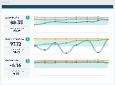


Conversation analytics is the AI-powered process of capturing, transcribing, and analyzing every customer and employee interaction across voice, text, and digital channels. Its core function is to transform unstructured dialogue into structured, searchable intelligence enriched with insight into sentiment, intent, and emotion. By analyzing 100% of conversations, businesses gain a complete, unbiased view of:
- Customer experience (CX)
- Compliance
- Operational performance
These faster, more accurate insights enable enterprise leaders to make data-backed decisions that improve service, increase loyalty, and drive measurable business growth.
How does conversation analytics work?
Modern conversation analytics platforms use AI, natural language processing (NLP), and machine learning to process both the words and context of conversations. The process involves speech and text components:
- Speech analytics: transcribes voice interactions
- Text analytics: processes written channels like email, chat, and social media
The technology automatically:
- Detects sentiment, intent, and emotion
- Identifies key topics and trends
- Flags compliance or quality issues
Results are delivered as searchable data, visual dashboards, and real-time alerts that enable faster action.
What differentiates modern conversation analytics from older approaches?
Modern conversation analytics is differentiated from older or legacy approaches by its scale, speed, and detail.
Legacy or less technology driven approaches rely on manually reviewing a small percentage of calls or chat logs and post-interaction surveys. Modern AI-powered analytics handles 100% of interactions at scale, in near real time, with far greater accuracy. It also goes beyond just what was said to capture how it was said - measuring tone, pacing, and emotion for a richer understanding of customer intent.
Why is conversation analytics important for customer experience (CX)?
Conversation analytics is important for customer experience (CX) because it gives teams a complete, unfiltered understanding of what customers truly think and feel at every stage of their journey. With immediate access to sentiment and trend data, problems can be addressed before they escalate into churn. It also reveals what’s driving positive outcomes, helping teams replicate and scale successful behaviors.
How is conversation analytics used in day-to-day contact center operations?
Conversation analytics is used in contact center operations to improve performance monitoring, agent support, and training.
- Performance monitoring: Supervisors and QA teams use conversation analytics to monitor performance without listening to every call manually.
- Agent support: Agents can get real-time guidance that helps them handle objections, upsell effectively, or de-escalate tense conversations.
- Training: Leadership gains access to reports that link interaction quality to business outcomes, enabling targeted training and process improvement.
How does conversation analytics help reduce bias compared with surveys and focus groups?
Conversation analytics help reduce bias compared to traditional methods like surveys and focus groups by providing objective feedback from all customers.
Surveys often capture the opinions of customers with strong positive or negative feelings, creating skewed results, while focus groups offer small samples influenced by group dynamics. Conversation analytics objectively processes feedback from all customers, providing a comprehensive, statistically valid understanding of sentiment, needs, and experience trends.
What measurable results do companies see from using conversation analytics?
Companies using conversation analytics see measurable results across both operational efficiency and customer experience. Common outcomes include:
- Higher first contact resolution (FCR)
- Reduced average handle time (AHT)
- Improved Net Promoter Score (NPS)
- Lower customer churn
- Increased upsell/cross-sell revenue
Companies also save on labor costs by automating QA and reporting, freeing staff to focus on more complex strategic work.
What industries use conversation analytics most effectively?
Conversation analytics is used most effectively by any industry with high volumes of customer interaction. This includes financial services, healthcare, collections, retail, and technology. These sectors benefit from targeted improvements in compliance adherence, risk detection, service personalization, and operational efficiency.