

Collecting customer feedback via a Voice of the Customer (VoC) Solution is only valuable if it leads to meaningful change. The best way to measure and act on the Voice of the Customer requires pairing quantitative metrics with qualitative context to understand not just what customers say, but why they feel that way. By operationalizing VoC data through automation and personalized engagement, organizations can proactively improve satisfaction, retention, and advocacy.
What metrics are most useful for VoC measurement?
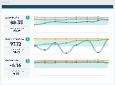
The most useful metrics for Voice of the Customer measurement are:
- Customer satisfaction (CSAT) - measures perceived quality of recent experiences
- Net promoter score (NPS) - gauges likelihood of recommending the brand
- Customer effort score (CES) - assesses the ease of achieving a goal or resolving an issue
- Retention/churn rate - tracks long-term relationship health
- Engagement rate - measures interaction with proactive outreach or follow-up initiatives
How can live interaction analytics improve Voice of the Customer (VoC) accuracy?
Live interaction analytics of customer communications improve VoC accuracy by capturing genuine, in-the-moment sentiment.
Unlike surveys, which are influenced by recent experiences and survey fatigue, live analytics identify nuanced emotional shifts and emerging themes. This enables immediate intervention, faster resolution, and better-informed strategic decisions.
What role does personalization play in acting on Voice of the Customer (VoC) insights?
VoC-driven personalization means tailoring engagement based on each customer’s history, preferences, and tone of recent interactions. For example, a high-value customer who had a negative service experience might get an immediate callback from a specialist, while a prospect showing purchase intent in chat could receive an offer in real time. Personalization aligns organizational action with individual needs for maximum impact.
How does proactive outreach based on Voice of the Customer (VoC) insights reduce churn?
Proactive customer care transforms VoC insights into early-warning systems that enable businesses to reduce churn. By flagging customers whose sentiment is declining or who show signals of dissatisfaction, teams can reach out before they leave. This might include offering targeted solutions, special offers, or additional support - all designed to re-establish trust and value before the relationship is lost.
What are the benefits of automating VoC-driven actions?
Automating VoC-driven actions ensures that insights lead to timely responses without overburdening staff. Trigger-based workflows can route cases to the right team, send follow-up messages, or update CRM records automatically. This accelerates resolution times, keeps customers engaged, and ensures consistent, data-driven follow-up across the organization.